
Hard to believe there could be a problem with Instant Pots. So many people rave about them. But I’ve noticed one problem, and it lies in the word “Instant.” In our time-starved world, that word is enough to send anyone racing to buy one with visions of instant meals, instantly available.
And yet . . . I hear countless stories of Instant Pots languishing in some remote corner of the kitchen. Why are we missing out on the promise of these miracle devices? Read on to discover why we’re getting waylaid by the “Instant promise” and how we can get around it and start realizing the benefits of an Instant Pot for healthy meal making.
A Lowdown on Instant Pots
In a recent Q & A session, one participant asked how I use my Instant Pot. She had been given one some time ago but hadn’t ever gotten it out of the box.
This is a common predicament—and not just for Instant Pots but for many other cool appliances and gadgets, too. So if you have one or more languishing in a kitchen cupboard, here are some pointers to get them working for you.
Dedicate a Set Up Time One problem with Instant Pots is the word “instant.” It makes us think you just plug them in and start cooking, instantly. In fact, an instant pot is really a pressure cooker and pressure cookers can be quite “explosive.” Although this modern version is simpler and safer, it still requires a little dedicated setup time.
But don’t worry. Instant Pots come with a nice little booklet that will walk you through set up. Just don’t try to figure it out 20 minutes before dinner! Dedicate a calm 30 minutes some day so you can get comfortable and confident with the device.
Don’t Forget Prep Time Pressure cooking is a great way to make food because it cooks food so fast. But note the emphasis on “cook.” Before the Instant Pot can work it’s speedy cooking magic, there has to be some food in the pot to cook! Whether it’s a soup, stew or a casserole dish, onions still have to be chopped, vegetables sliced, seasonings added, broth poured in, and so on. Only then can the pot do some instant–or at least really fast–cooking.
Given this fact, when mapping out a meal making game plan in your head, be sure to allocate as much time for prepping as with for any other cooking method.
Learn Cook Times and Settings Once it’s time to cook, you have to figure out how long to cook what’s in the pot and what setting to use. This is the tricky part. For more tender foods, like most vegetables, chicken and fish, the cook times are really quick, e.g., 1 to 5 minutes, and just an extra minute or two can lead to an over-cooked (often not-to-tasty) food.
But again, don’t worry.
- When it comes to cooking times, there are handy charts to get started, either on the internet (search on “cooking times for Instant Pot,”) or from Instant Pot cookbooks. As I learn the times that work for my tastes, I note them on my cooking charts.
- As for a Pot’s various settings, this handy website to help decipher them: A Pressure Cooking Kitchen.
- Next, err on the side of undercooking, as you can always use the Saute setting to cook something a little more.
- Also know that with sturdier foods, like a roast, whole chicken, grains and beans, the cooking times aren’t quite as precise, but it’s still good to follow the charts as much as possible.
- Finally, be assured that with a little practice you get more comfortable and begin to know cooking times and settings more intuitively.
Allocate Pressurizing and Releasing Times A pressure cooker can cook so quickly because the pressure inside the pot is so high. But building that pressure takes anywhere from 5 to 20 minutes depending on the amount of food in the pot. Only then does “instant” cooking happen.
Meanwhile once the cooking is done, all that pressure has to be released, which can take another 5 to 20 minutes. At least these are hands-off minutes that can be used to make the rest of a meal. Just be sure to include them into the timing schedule for a meal.
Find Your Best Uses I use my Instant Pot a lot. But only for what I call “parts and pieces,” i.e., to make a beef or pork roast meltingly tender, cook perfect rice, make deliciously rich bone broth, cook legumes (even without prior soaking), quickly cook root vegetables for blender soup, and cook tough green beans and broccoli. A lot of these parts and pieces then go into other dishes, usually on the stovetop, as described below.
I rarely use my Pot to make an entire dish. I have seen recipes for complete dishes but they require cooking the sturdier parts for a while, then adding the medium-sturdy ingredients and then finally the more tender parts. For each part, the Pot has to be pressurized, then released, which seems like a lot of tending to me. At that point, I’d rather just have a pot on the stove so I can keep an eye on things and quickly add each batch of ingredients at the right times.

Moral of the Instant Pot Story
Instant Pots don’t actually produce Instant Meals!
Despite having these and many other helpful and time-saving resources, the fact remains that none of them jump up and make healthy meals on their own. Somebody has to exert time and effort to put them to use.
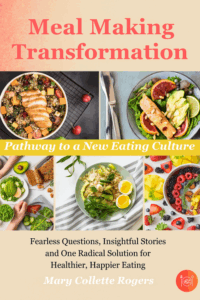
This is where Meal Making Transformation comes in.
As explained in my Meal Making Transformation booklet, whether to exert that time and effort is driven by our thinking, i.e., by what we value and believe to be a worthwhile use of our time. Unless we truly value meal making, what are the chances we’ll put an Instant Pot or any other helpful resource to work creating healthy meals?
This is where New Thinking comes in. What if we so deeply valued our health that we felt compelled to deeply value the meal making that sustains our health? And to do things like finding the time and making the effort to put helpful tools to work so we could readily make the health-giving meals of our dreams.
An interesting thing happens when the mind truly and deeply values something. That something begins showing up in our lives–like deliciously nutritious meals on the table!
Read or Listen to the Booklet Here
A Final Thought: Time to Declutter?
What if you can’t devote the time to get a gadget or appliance up and running? Or you find it really doesn’t help with meal making? Then maybe donate it to someone who could use it?
Free up space for something that could be helpful! Plus, stop feeling guilty every time you see it languishing in a kitchen cupboard!
1 thought on “There’s a Problem with Instant Pots?”