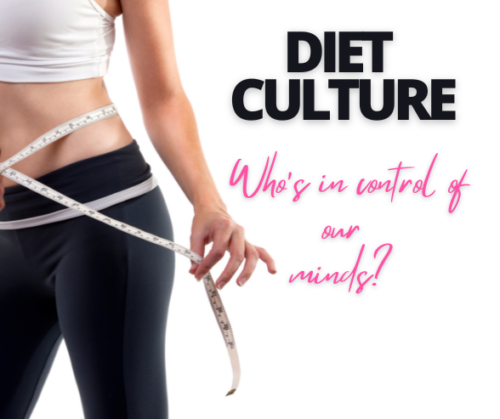
I was a guest on a recent SoulShift podcast, “Reclaiming Health, Culture & Connection Through Meal Making.” Following is a comment by co-host Mindy Gorman-Plutzer which deserves a further conversation:
Early in our podcast, Mindy brought up Diet Culture, saying: “I’m so drawn to the work Mary does because in my work with women around food freedom and body acceptance, I have seen how deeply our relationship with cooking and nourishment has been shaped by Diet Culture. That’s really where a mindset reframe is needed.”
Over the years, most of us have likely read or heard about the pernicious effects of Diet Culture. We know, on an intellectual level, that we’re being sold on fictitious notions of perfect bodies, perfect weights, perfect diets, etc. The issue is whether, on a practical level, this knowledge will protect us from automatically responding to pitches for diet meals, pills, shakes, books, spas, clubs, exercise programs and so on. A big part of Mindy’s work is helping women “reclaim a mindset of abundance when it comes to the kitchen,” so we don’t let Diet Culture dictate what we buy, make and eat.
I was glad Mindy raised the Diet Culture problem because seeing how the force of culture works on us around dieting can help us better see how Convenience Eating Culture works on us around the kitchen and meal making. In a nutshell, that culture (created by the convenience food industry) has convinced us that convenience foods represent the modern way to eat. No one should have to slave away in the kitchen to make their own real, whole food meals when food now comes in convenient boxes, cans and packages.
The key factor to keep in mind is that there is a cultural piece when it comes to food, eating, the kitchen and cooking. In other words, “it’s not all about you!” Of course the way you eat, what you eat, how you eat, the health you enjoy–these outcomes are very much a product of our lifestyle choices. But the lifestyle choices we make are closely intertwined with–and even dictated by–the cultural milieu in which we live.
So if 2026 is the time to be new in meal making and eating, we have to broaden our “scope of work” beyond the individual level. In addition to improving our personal decisions, we need to cultivate an awareness and understanding of the cultural forces at work that are doing their best to thwart us–very often in ways we don’t even know about!
Marketing experts are no dummies. They know their psychology. And their marketing messages are designed to stick in our brains without our even realizing it! So it takes some equally expert sleuthing on our part to identify how we’ve been conditioned and to then root out mindsets that have been lodged in our brains over several decades when they don’t really serve us.
In other words, we need to retake control of our brains. Gradually, begin questioning your food decisions: “Who is telling me to buy or eat this food?” “Is it in my best interest or am I being enabled to eat in a way that serves someone else’s profit needs rather than my health needs?”
Take it slow and rest assured that as you get the hang of things, it gets easier and easier to spot the “Food Deceivers” and then it’s kind of fun to bust them!
Notice how I’m returning, once again, to a theme from the last few newsletters: We Gotta Think for Ourselves. Remember last month’s quote: If you aren’t in control of your thinking, someone else is.

George Orwell spoke bluntly about the nefarious nature of advertising, calling it “the rattling of a stick inside a swill bucket.” from Jim Hightower and FYI, a “swill bucket” is filled with garbage to feed hogs!