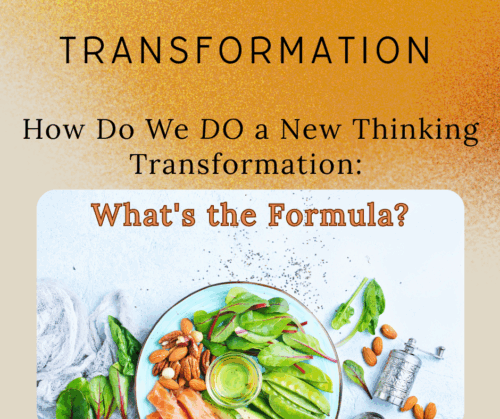
This is the last of six articles on Transformation: Being New in Our Thinking. Now that we know what this deeper level “new thinking” looks like, we can explore how to make a new thinking mindshift and enjoy the many positive benefits it brings.
The neat thing about undergoing a thinking and values shift on the inside is that life on the outside changes to match–very often without a lot of struggle, stress or sacrifice. That’s because our true and deepest thinking and values are what drive our actions. Change our thinking and values and our actions naturally and easefully follow along.
I hope you’re excited about the healthy eating opportunities that become possible with a supportive change in thinking. But how do you become someone who truly and deeply values and respects food, eating, the kitchen and cooking—so that your thinking supports healthy meal making? Especially when we are immersed in a culture that encourages and even idealizes just the opposite?
Exactly How Do We DO a Transformation: What’s the Formula?
Step 1–Thinking for Ourselves Here’s the thing: This entire series is about changing the way we think, which then leads to a beneficial shift in our values. However, this beneficial sequence presupposes that we are in control of how we think! And that is not necessarily true, as surprising–and alarming–as that may be!
The fourth segment in this series explained how we have been the target of a vast marketing campaign over the last six or seven decades. It was undertaken by a convenience food industry intent on keeping us out of the kitchen for this simple reason: By persuading us to steer clear of the stovetop, we became reliant on and eager purchasers of convenience foods.
As also explained earlier, for many years I went right along with this marketing message, eating more and more processed foods and distancing myself further and further from the kitchen. Eventually, I even came to view cooking as unexciting, unimportant and even irrelevant. In other words, I had little to no value or respect for food, eating, the kitchen and cooking.
The first step in my journey, then, was regaining control of my thinking enough to steer it in a more beneficial direction. In other words, I had to start thinking for myself.
So instead of just operating on autopilot:
- I had acknowledge the uncomfortable fact that something wasn’t quite right about my eating habits.
- I had to put a little time and effort into examining that unease instead of pushing it away and continuing blindly down the same dead end path.
- I then had to work up the courage to begin questioning all our culture’s norms, assumptions, values and beliefs around food, eating, cooking and the kitchen.
- I had to be daring enough to think and act differently from all my friends, family members and the wider community.
- Once freed from all the limiting beliefs that had trapped me, I could begin looking at things from a fresh, new and objective perspective.
- Eventually I was able to create new values and beliefs that served my best self-interests, rather than the interests of the convenience food industry.
- Included among those new values and beliefs were honoring and respecting the kitchen and cooking instead of being resentful and dismissive of them.
So step one for Being New in Our Thinking is simply this: getting in the habit of thinking for ourselves instead of outsourcing our beliefs, values and thinking to the convenience food industry.
Step 2–Harnessing a Little Righteous Anger Thinking for myself made it possible to consider my food situation rationally. Viewed dispassionately and logically it became crystal clear that I had been hoodwinked, and for a long time. That’s when I got a little miffed–even angry! Do I really want to let myself get tricked into eating food that harms me?! Am I not smarter than that?! Don’t I deserve better?!
Of course, uncontrolled anger is not a good thing. However a little righteous anger made it easy to exit the convenience food scene and cemented a desire to make my own, real whole food meals.
Step 3–Firing Up the Imagination Change leaders often say that change won’t come unless we can envision something better. Without a guiding vision, we are just wanderers in the desert.

Honestly speaking, I didn’t have a vision to guide my journey to a new way of thinking and eating. That’s because I didn’t know I was up against a cultural force trying to keep me stuck in an eating sinkhole. I didn’t know that I needed a new way of thinking, much less could I imagine a vision of what a supportive mindset might look like.
Hopefully, you are now in a better position that I was. The previous segments have clarified why a positive guiding vision is needed, while also offering a good starting point for creating a helpful vision.
Although my vision was late in coming, I now envision a life and community wherein meal making is so valued and respected that we celebrate the opportunity to take good care of ourselves and we treasure the simple act of making and eating meals that delight and nurture us.
Step 4–Spotting Your Inspirational Spark Closely related to firing up our imagination is finding an inspirational spark to ignite the change process.

The reason is simple: Change is almost always challenging, and especially so around our thinking. And especially so for food-related thinking, since we are immersed in a food world brimming with health-destroying options that are irresistible. Absent a possibility for something bigger and better, of course we won’t leave this carnival of tempting options!
An inspirational spark is exactly the “something bigger and better” that can help us overcome the allure of all the tempting options so readily available in our food world.
A Health Crisis as Inspiration I always thought that our family health crisis was the inspirational spark behind my thinking and values shift. Indeed, that crisis got me moving! It got me in the kitchen making three meals a day and successfully regaining our health. But as shared earlier, I felt terribly put upon and even resentful of that daily duty. There certainly wasn’t much fondness, much less value and respect for meal making.
Wonderful Good Health as Inspiration Rather than the health crisis itself, it was what happened after the crisis that inspired my thinking and values shift. Gradually, I got to experience feeling good again–no bloated stomach after every meal, no airborne allergies taking me down, no more colds and flus, no more complete exhaustion, no more need to gulp down Tums® every other day.
As shared in a previous segment, the lights went on as I realized the connection between the amazingly good health I was experiencing and the food I was making and eating. How could I do anything other than value and respect the cooking that transformed real, whole foods into health-giving meals. That daily ritual was giving me health, energy, joy–and life!
It’s an unfortunate fact that for many people, it takes a health crisis to get moving in the direction of healthier eating, as it was for me. If you’ve had to experience a health crisis, then maybe an inspirational spark can come from simply taking time to connect healthier meal making with feeling better, having more energy, and not getting drug down as much by pain and illness.
By nurturing an appreciation for feeling better, perhaps you can kindle some warmth and magnanimity–and eventually value and respect–for the cooking that delivers those benefits.
A Step of Faith as an Inspirational Spark Perhaps you haven’t realized any inspiring health breakthroughs from your healthier eating efforts? Or maybe you haven’t experienced any huge health issues but still feel compelled to start eating better. Or maybe you are facing health issues but haven’t yet begun changing the way you eat.
Absent any external health benefits to spark change, you may have to draw on an internally generated spark of faith. Admittedly, there is precious little in the mainstream that would inspire faith in the wonderful health benefits of eating well. But step outside the mainstream and the evidence is plentiful!
There are so many podcasts, books and articles (like this newsletter!) that share the stories of people (like me!) who have realized wonderful good health and even cures for chronic disease simply by eating better and making other lifestyle changes! And unlike corporations promoting highly-profitable, health-destroying foods, these emissaries of good health aren’t reaping millions and billions by advocating healthy eating. Most are just excited to help others experience the same wonderful health that they have experienced.
Granted it’s hard to believe that you can experience the same health benefits as people who have already met with success. Especially since many of those people have become famous book authors, podcasters and even celebrities. But our bodies were designed for good health when fueled and cared for properly. It really does happen! There is no reason we can’t all share in the goodness of health.
Good health may take a while, but here’s the cool thing. As soon as you start taking small steps, you’ll begin noticing small improvements.
Taking those first small steps is where the leap of faith comes in. As you start experiencing small glimmers of hope, draw on them to generate the inspirational spark needed to maintain the daily practice of healthy meal making. Finally, as the health benefits pile up, see if you don’t begin befriending and embracing the kitchen and cooking as your allies on the healthy eating journey!
And there’s also something to be said for the point when you start realizing the joy of making a good meal that takes good care of you–and then sitting down to enjoy it! What a lovely addition to life!
Other Inspirational Sparks Of course there are many other sources of inspiration in addition to good health. Experts sometimes refer to them as “Big Whys,” e.g., things like being able to travel, stay mobile and independent, play with the grandkids on the floor, and not becoming a burden on family. Interestingly, however, all of these examples depend on having good health!
Plus–A Couple More Pieces of the Formula Besides getting in the habit of thinking for ourselves, imagining a guiding vision, and finding an inspirational spark, here are a few other pointers for becoming someone who truly and deeply values and respects food, eating, the kitchen and cooking.
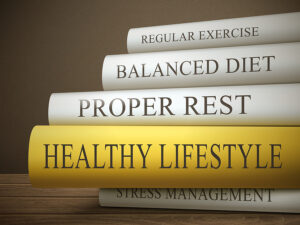
- Continuous Immersion I regularly read articles and listen to podcasts about various aspects of good health ranging from exercise to stress relief and from good sleep to, of course, healthy eating. This habit provides good positive reinforcement for my efforts, along with many helpful ideas and inspiration.
- Staying on Top of Resistance Don’t underestimate the mind. Very often, only by dragging it kicking and screaming will it change. That is perfectly normal, since brains seem to prefer the status quo. Don’t let it deter you. Be gentle but firm–much like disciplining a rebellious 2-year old!
- Seeing Yourself in a New Way Right now, you might see yourself as someone who just punts when hunger strikes, or someone who never thinks about meals, or someone who just resorts to convenient grab ‘n go. Part of a thinking change is seeing ourselves in a new way. Try acquainting yourself with a new someone for whom it is perfectly natural and normal to throw together a health giving meal–even if it’s just a simple but filling salad, stir-fry or skillet or just a deli chicken breast, microwaved potato and steamed broccoli.
- Finally–Resting and Getting Comfortable for Life The first stages of change are always the hardest. Over time, a new way becomes the normal and usual way. That will happen with healthy meal making at which point, Meal Making Transformation will have taken root! Settle in and get comfortable for life–and begin enjoying the many upsides of meal making, like more creativity, good taste, stress relief, money savings, and even a little fun–all in addition to better health!