A post last month reported on a recent article that had this to say about fiber:
“Protein may be hot, but it’s fiber that Americans need to eat a lot more of.”
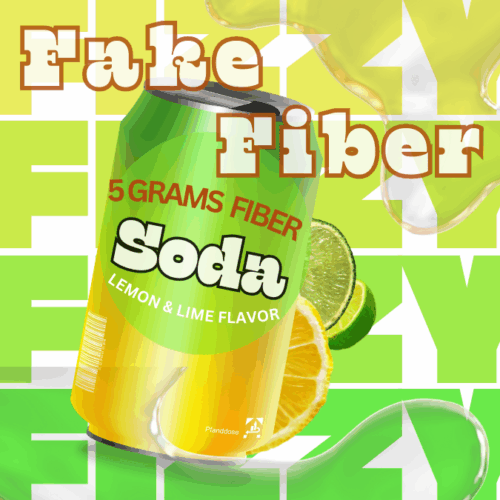
So now fiber is “trending,” which is easy to see in the food aisles because food makers are racing to cash in on it. They are packing fiber into everything from soda and energy drinks to doughnuts and snack bars. Social media posts are filled with stories of “fibermaxxing.”
Not so fast says an article out this week.(1) As researchers are finding, “there’s a big difference between eating naturally high-fiber foods like fruits, vegetable, beans and whole grains, vs. fiber-enhanced processed foods and supplements.”
Research is showing that fake fiber can actually cause problems like altering liver enzymes or the part of the immune system that fights cancer. It can also throw off the microbiome’s balance, lead to inflammation, and exacerbate symptoms of MS and GI disorders like IBS.
Bottom line is “You can’t just say, ‘I’m going to eat junk all day and then I’m going to have a fiber soda, so there you go, I’ve filled my quota for fiber.'” So says Dr. Purna Kashyap, director of the mircrobiomics program at Mayo Clinic.
That statement ties into the further observation that many of the foods with fake fiber are processed foods like snack bars, cereals, breads, yogurt, ice cream, jam and protein drinks, which “aren’t things we should be having often anyway,” because they contain high amounts of sugar and other additives like emulsifiers (that also cause microbiome dysfunction.)
So don’t be “health-washed.” Food marketers are very clever. As explained in Section 6 of Meal Making Transformation, the first step to healthier eating lies in thinking for ourselves. More specifically, determine 1) who is trying to convince you and 2) what is their motivation–profits, reputation or true concern for your long-term health?
(1) Based on “Doctors Warn Against Too Much Fiber-Enriched Foods,” Elizateth Bernstein, Wall Street Journal, September 3, 2025 p. A8.